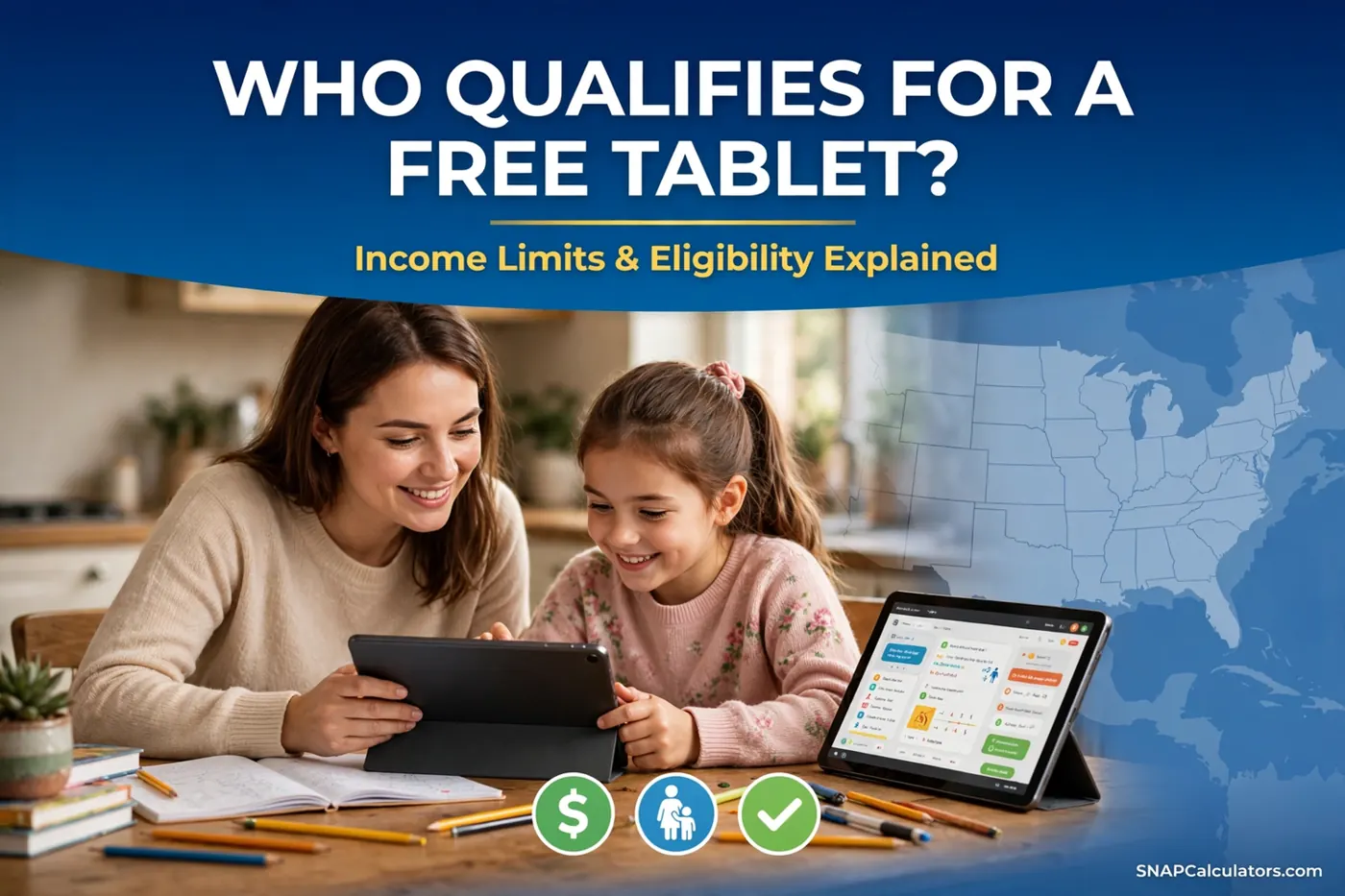
No federal program gives out free tablets, iPads, or laptops just for having an EBT card or Medicaid. What SNAP and Medicaid do is qualify you automatically for programs that can lead to a free or low-cost device: Lifeline phone carriers, nonprofit refurbishers, libraries, schools, and some health plans. The Affordable Connectivity Program (ACP), which funded most "free tablet" offers, ended on June 1, 2024.
Does Medicaid give free iPads?
Medicaid does not give iPads as a general benefit. The main exception is medical: Medicaid can pay for an iPad-based speech-generating device when a person cannot communicate effectively by speaking, and it is prescribed and approved as durable medical equipment. Medicaid members can also use their enrollment to qualify for Lifeline and some health plan benefits.

iPads as speech-generating devices (AAC)
People with autism, ALS, cerebral palsy, stroke, and other conditions may use augmentative and alternative communication (AAC). Medicaid covers AAC devices in every state when medically necessary, especially for children under the Early and Periodic Screening, Diagnostic and Treatment (EPSDT) benefit, which covers medically necessary services for enrollees under 21.
Get an evaluation
A speech-language pathologist evaluates communication needs and tries different devices.
Get a prescription
The doctor writes a prescription and the SLP writes a report showing why the device is medically necessary.
Submit for prior authorization
The equipment supplier or SLP submits the request to Medicaid or your managed care plan.
Appeal if denied
Ask for a written reason and file an appeal within the deadline on the notice.
Coverage rules vary. Some states approve an iPad with an AAC app as a bundled device; others only approve dedicated speech devices. Many require the device to be "locked" so it works only as a communication aid. If you are denied, you can appeal, and disability rights organizations in your state can help.
What to bring to an AAC request
- A diagnosis from the treating doctor
- The speech-language pathologist's evaluation, including devices tried and why the chosen one works best
- A prescription for the device and any mounting or accessories
- Your Medicaid or managed care member ID
If the plan suggests a cheaper device that does not meet the person's needs, ask the evaluator to explain in writing why it is not adequate. That letter is often the key to an approval or a successful appeal.
Other ways Medicaid members get iPads and tablets
- Lifeline eligibility: Medicaid qualifies you automatically. Carriers mainly offer Android tablets.
- Health plan benefits: some Medicaid managed care plans offer phones, data, or devices for telehealth.
- Home and community-based services (HCBS) waivers: some state waivers cover assistive technology that helps people live independently, which can include tablets.
- Vocational rehabilitation: state VR agencies may buy technology people with disabilities need to work.
- Libraries and nonprofits: free lending and donated devices.

Medicaid and the poverty level
Adults in Medicaid expansion states qualify with income up to 138% of the federal poverty level. See where your income falls with the poverty level calculator. Seniors and people with disabilities on Medicaid often also qualify for SNAP with easier rules: no gross income test and a medical expense deduction. Check with the SNAP eligibility calculator.
Avoid free tablet scams
Never share your EBT PIN, never pay fees with gift cards, and ignore any offer still promising an "ACP tablet". Real Lifeline carriers are listed on LifelineSupport.org. See our full guide to spotting free tablet and iPad scams.
More free device guides: free tablets for seniors, who qualifies for a free tablet.
Frequently asked questions
Will Medicaid pay for an iPad for autism?
Medicaid may cover an iPad-based AAC device when a speech-language pathologist documents medical need and the state approves it as durable medical equipment.
What is EPSDT?
Early and Periodic Screening, Diagnostic and Treatment is a Medicaid benefit that covers medically necessary services, including equipment, for enrollees under 21.
Can I appeal a denial?
Yes. You have the right to appeal any Medicaid denial. The notice lists the deadline and how to file.